
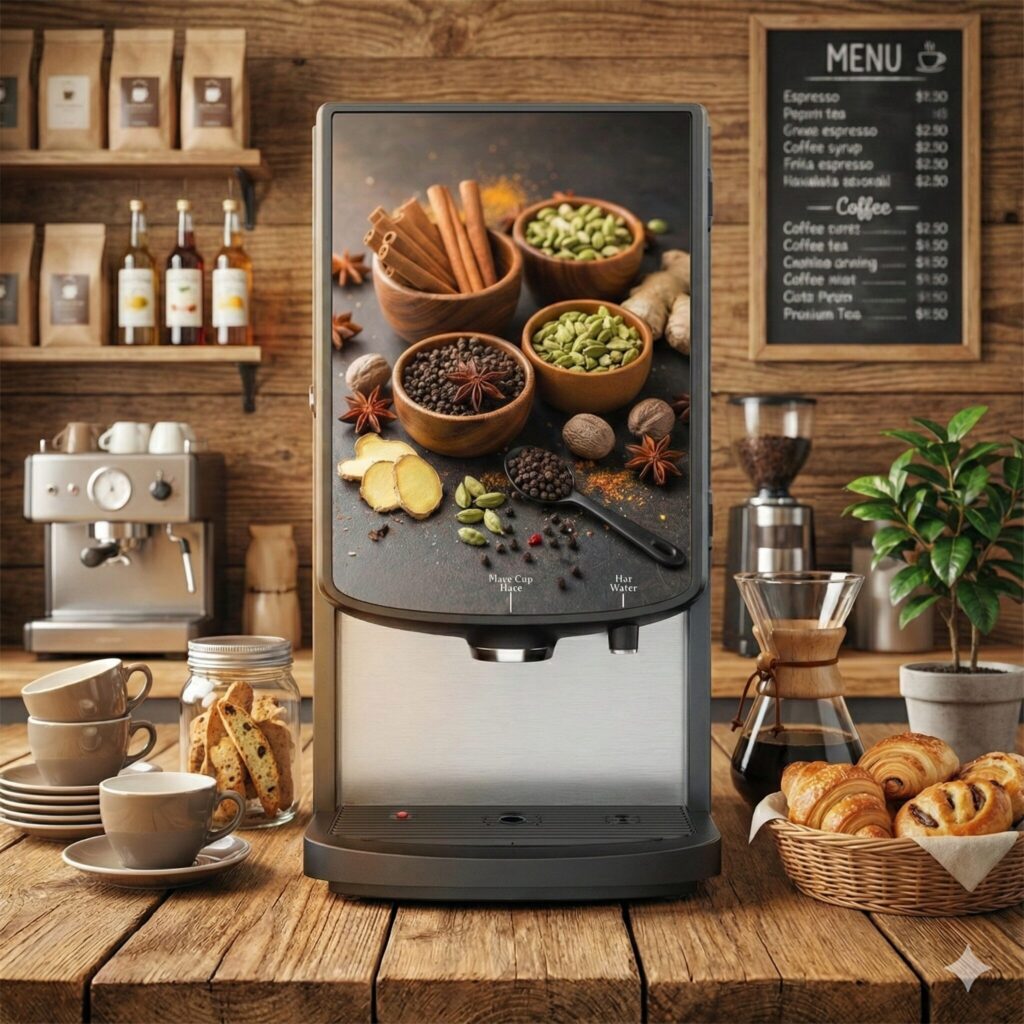
Coffee will always be a staple, but cafés that rely on coffee alone are leaving money on the table. Across the UK, more venues are adding chai to their menu, not as a trend piece, but as a reliable, profitable drink that sells consistently throughout the day.
Chai appeals to customers who want something warming, familiar, and flavour-led, without the intensity of coffee. For café owners, it offers speed, consistency, and margin, without adding pressure to service or training.
Chai Is Already Familiar to Customers
Chai isn’t a niche drink anymore. Many customers already recognise it from cafés, high-street chains, and home use. Adding chai to your menu doesn’t require explanation or education. It fits naturally alongside coffee, hot chocolate, and tea.
Crucially, chai attracts:
Customers who don’t drink coffee
Customers looking for a softer caffeine option
Customers who want something indulgent but familiar
That’s incremental sales rather than substitution.
A Drink That Sells Beyond the Morning Rush
Coffee sales peak early. Chai performs differently.
Because it’s smooth, warming, and not overly stimulating, chai sells well:
Mid-morning
Afternoon
Early evening
That extended selling window makes it particularly attractive for cafés, food outlets, and hospitality venues where coffee demand drops off after lunch.
Speed and Consistency Matter
Handmade chai can be time-consuming and inconsistent. That’s where commercial chai machines make sense.
A dedicated chai machine delivers:
One-button service
Consistent taste every time
Fast turnaround during busy periods
This matters in real service conditions, where staff turnover, training time, and queue speed all affect profitability.
You can see how this works in practice on our commercial chai machines page:
👉 https://chaimachines.co.uk

Low Complexity, Strong Margins
Adding chai doesn’t mean reworking your menu or retraining staff extensively. With a commercial setup, chai becomes a straightforward, repeatable drink with predictable costs and returns.
For venues selling drinks rather than giving them away, chai works because it:
Uses minimal counter space
Requires no specialist barista skills
Sits comfortably at a café price point
If you’re assessing whether chai fits your venue, it helps to understand the broader growth of chai as a café drink. This overview of chai’s rise in Western cafés gives useful context:
👉 https://www.bbc.co.uk/food/articles/chai_tea_explained
Chai as a Menu Complement, Not a Replacement
Chai doesn’t replace coffee. It complements it.
Venues that perform best don’t frame chai as an alternative for coffee drinkers, but as an additional option for customers who want something different. That wider choice improves overall drink sales without cannibalising your core offer.
